Expository notes on geometry, topology, and the places where they turn into physics. The code that produced the figures is open source.
Where Light Cannot Decide
One ray goes into a crystal and a ring comes out — and topology says it had to
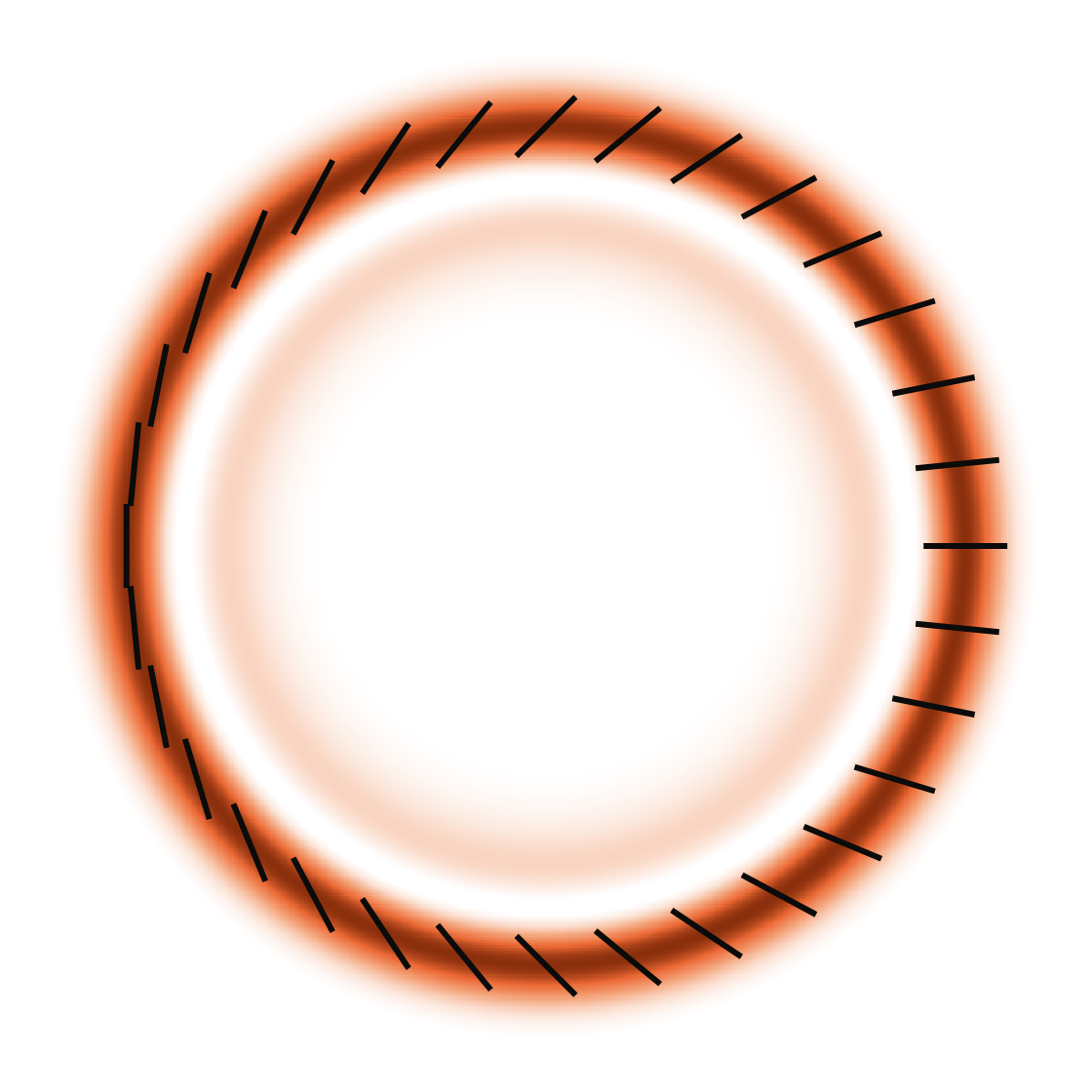
Along its optic axes a crystal offers light two equal speeds and no way to choose between them, so it sends the light every way at once, around a hollow cone. Hamilton predicted it in 1832 from mathematics alone. The polarization around the ring turns only half a turn, and that half is why the cone cannot be avoided.
When Geometry Acts Like a Force
A molecule loose in a narrow channel is pushed by nothing at all — and still climbs hills
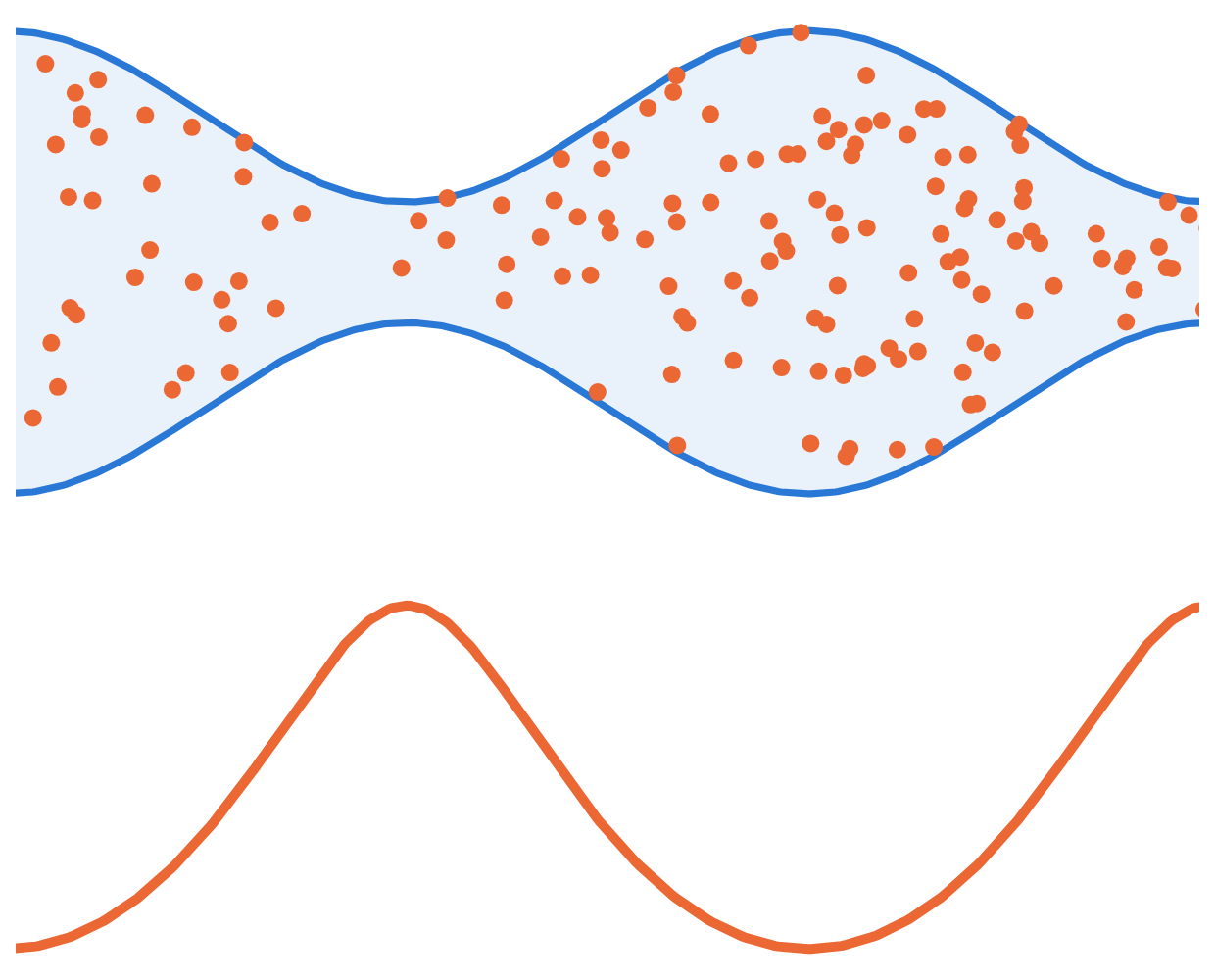
Throw away two of the three coordinates of a wandering molecule and the channel’s shape comes back as a potential landscape made of nothing but the logarithm of the available room. The Fick–Jacobs equation, built up from pictures — and then pushed until it breaks, on a channel whose cross-section turns as it goes.
Finding the Sides of Things
What makes a face a face — and why millimetres and degrees must never share a ruler
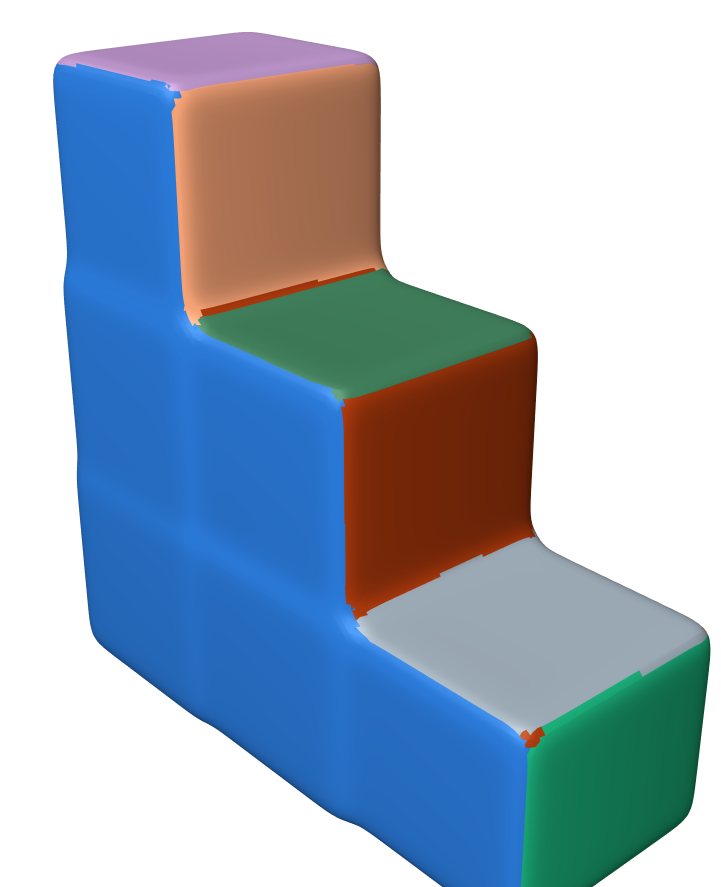
A side is a patch facing one way, which is about direction; but two treads of a staircase face the same way and are still two sides, which is about position. Clustering both at once needs a product kernel — and the alternative, one bandwidth on a six-number vector, silently invents an exchange rate between degrees and millimetres.
The Shape of All Possible Orientations
A 3D printer asks one question before anything else — which way up?
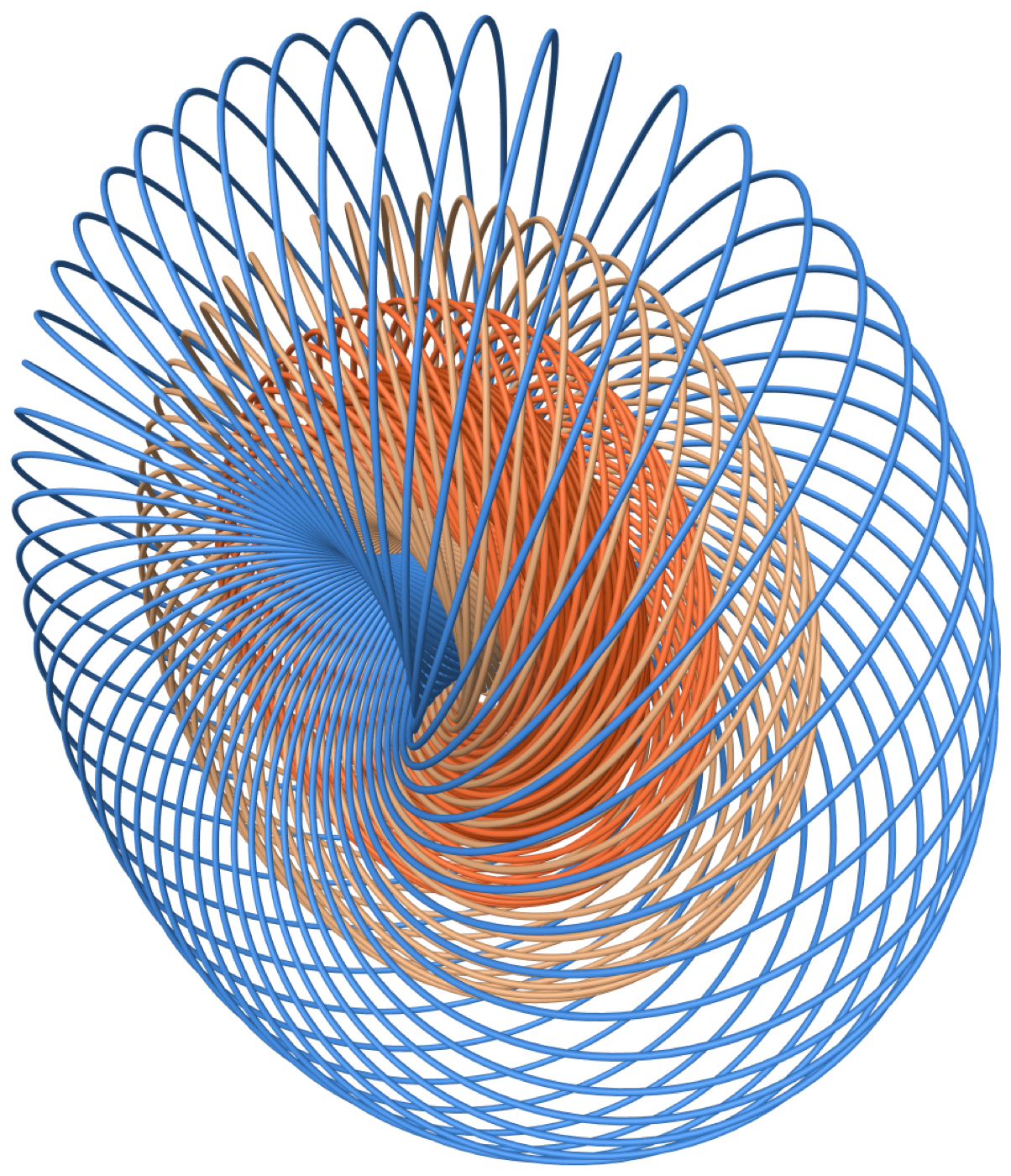
Turn a part on the print bed like a turntable and every overhang stays exactly where it was. So the search for the best orientation happens on a sphere, not in three dimensions — and the circle of spins you just threw away, one over every point of that sphere, is the Hopf fibration.
Sculpting with Equations
How to build a coffee mug, a die, and a two-holed doughnut out of a single formula
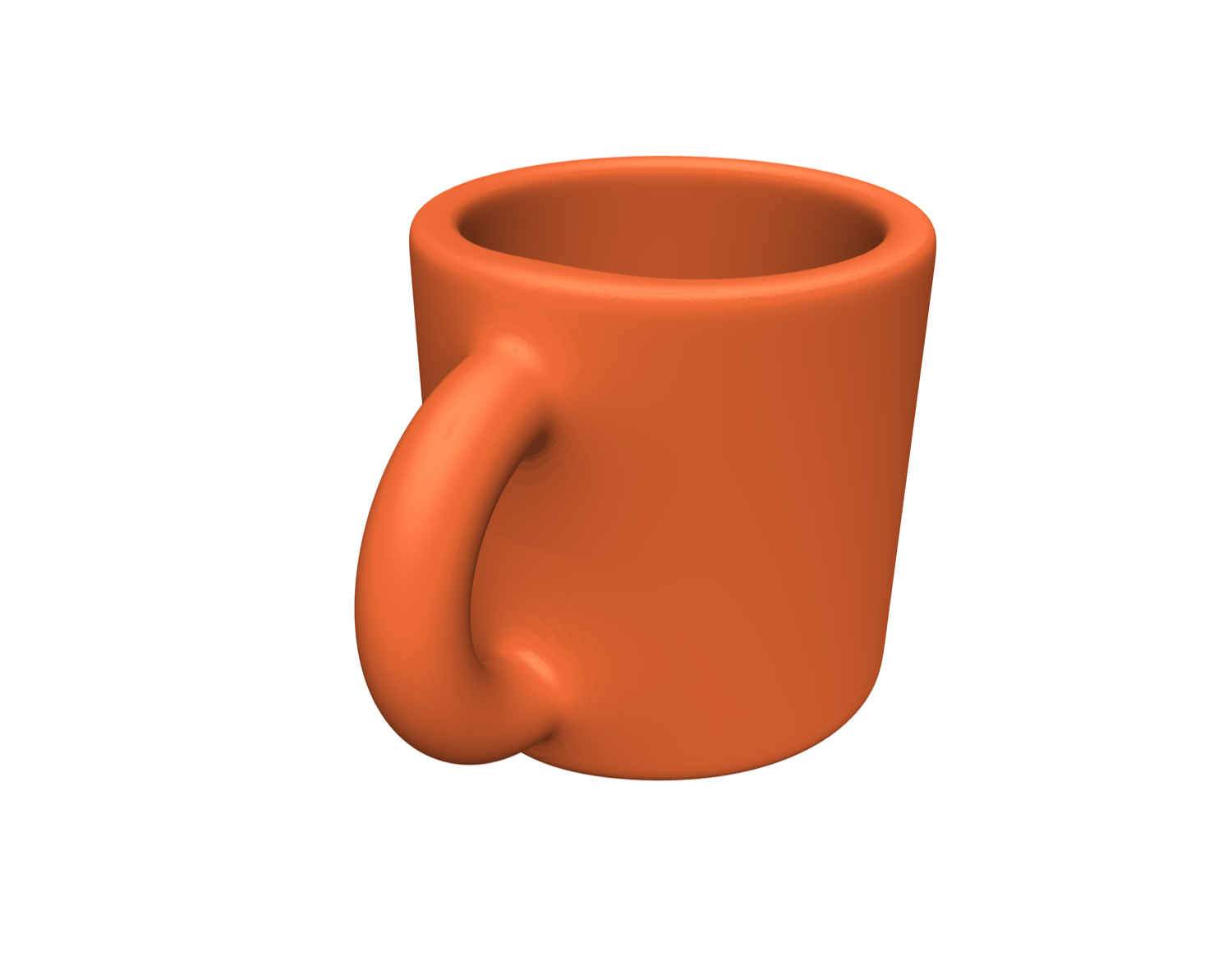
Set operations become ordinary arithmetic once a shape is replaced by its indicator function; softening the step function into a sigmoid turns that arithmetic into a sculptor’s thumb. A tour of implicit modelling, from Boolean algebra to a genus-two surface, with every figure generated in Python.
Which Way Are You Facing?
How to count the turns of a closed loop by glancing at a handful of points
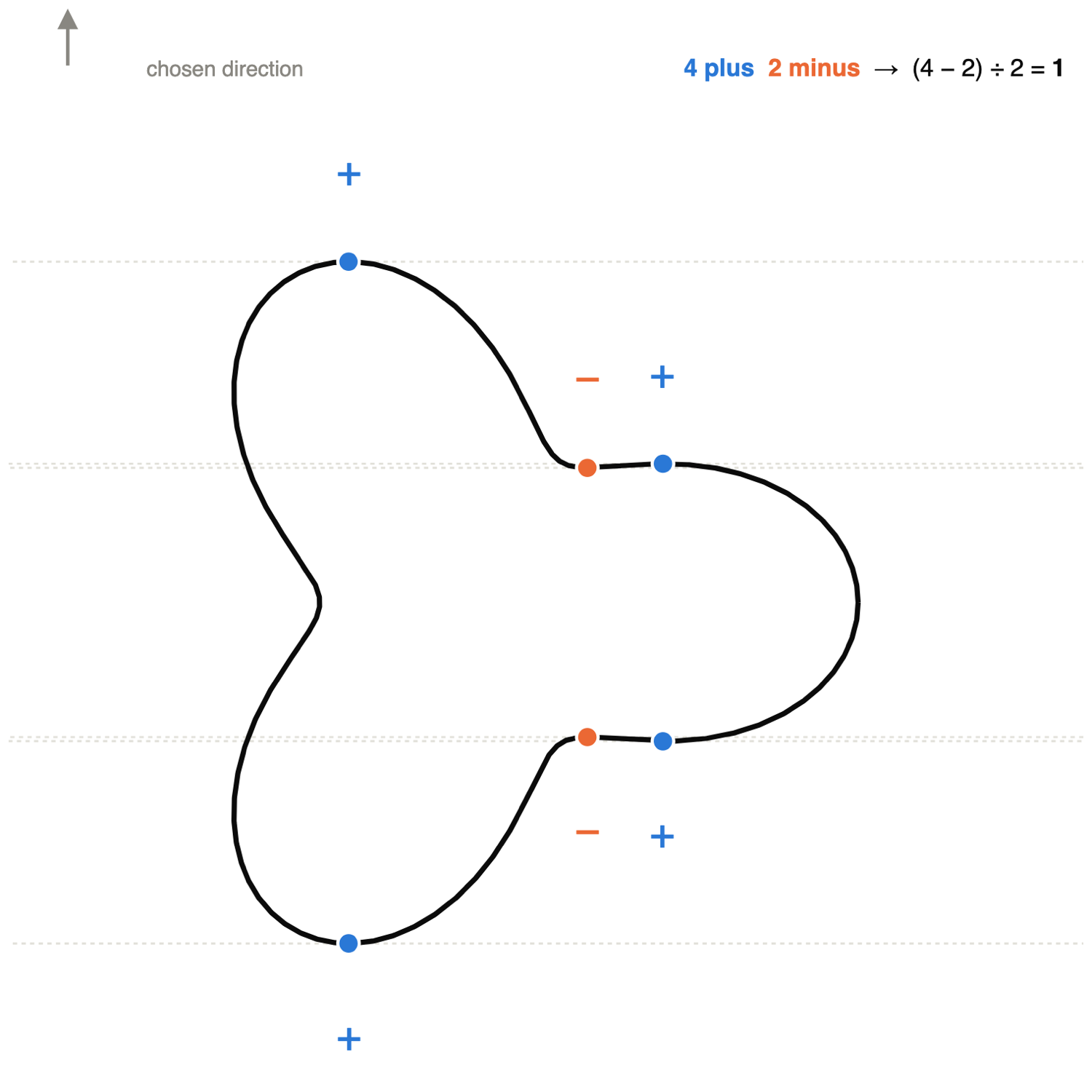
Walk around a closed loop and you return facing the way you started, having turned a whole number of times. Finding that number looks like it needs continuous watching. It doesn’t — pick any direction, mark the few points where you travel crosswise to it, and do one subtraction.